
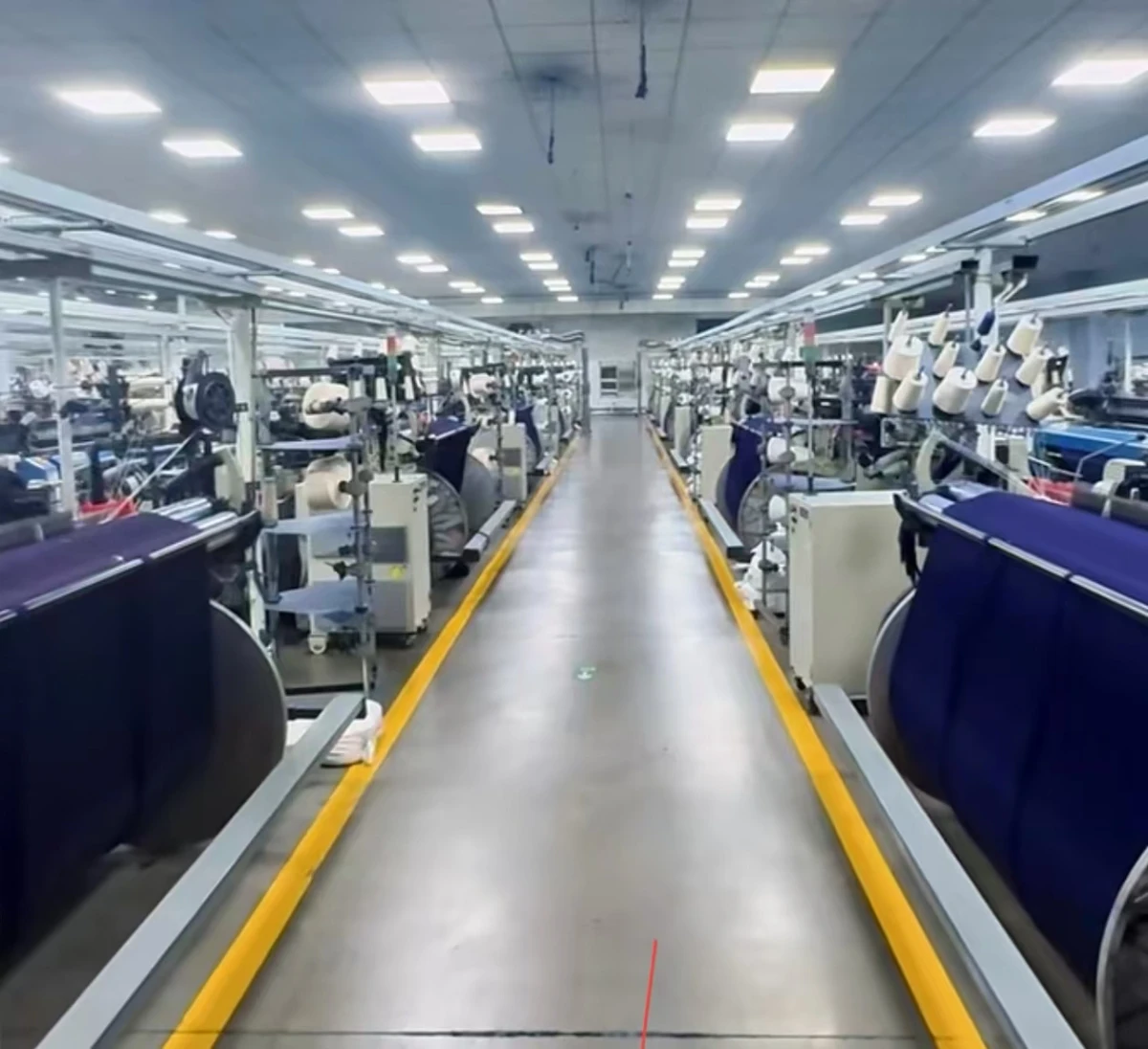
In a water-jet loom workshop, how does a tender's day go?
One person watches 25-40+ looms; from clock-in to clock-out, feet never touching the ground, running patrols across the whole workshop — running for what? To check which loom's red indicator is lit. A lit light means the loom stopped — hurry over, see whether it's a warp stop or weft stop, fix it, then keep running.
By day's end, back and legs are broken from running, not even a moment to drink water. Worse: run too slow and a warp break goes unnoticed — several meters of defect fabric are produced; run too fast and you miss some loom's light, and the defect rate goes up again.
This is the reality of traditional drop wires and manual patrols.
Is there a way that lets the tender stop running all over the workshop to find warp breaks?
Yes.No-drop-wire light-beam warp-break detection, is changing this working pattern that has lasted for decades.
One. Principle: with a beam of light, "see" the state of every warp yarn
The core of light-beam warp-break detection is to install, on both sides of the loom's warp-yarn zone,Laser emitterandReceiver, forming a light curtain that covers all the warp yarns.
During normal weaving, every warp yarn moves regularly within the light curtain, and the system recognizes this as the "normal state".
Once a warp yarn breaks, the yarn loses tension and will showSag, swing, entangle, displaceand other motion features — these features change the light-intensity distribution within the light curtain. The system analyzes the intensity changes in real time through algorithms, and within≤0.3 msit identifies the "warp-break event" and pinpoints it toWhich warp yarn.
What does 0.3 milliseconds mean? A human blink takes about 100-300 ms. That is, in the time you blink once, the system has already completed hundreds of warp-break detections.
After detecting a warp break, the system does three things:
- Auto stop
: triggers loom stop to avoid continuing to weave defect fabric - Precise location
: shows which loom, which warp yarn broke; the tender goes directly to handle it, no need to search - Categorised alert
: pushes the "warp stop" or "weft stop" info to the tender's smartwatch / wristband via wireless signal, with vibration alert — no need to watch red lights across the workshop anymore
That is the whole principle:One beam + one algorithm + one wireless alert replaces the traditional model of "drop-wire mechanical contact + manual patrol watching red lights".
Two. Compared with traditional drop wires, where exactly does it differ?
Table
| Detection method | ||
| Response speed | ||
| Detection accuracy | ||
| Location capability | ||
| Alert method | ||
| Operator labour intensity | ||
| Looms per operator | ||
| Mechanical wear | ||
| Data networking | ||
| Suitable loom types |
The most intuitive change isOperator work mode:
Before: one person watched 20+ water-jet looms; from clock-in to clock-out it was all running — running to watch red lights, running to find warp breaks, running to fix problems; by day's end your legs were swollen. And humans aren't machines — there are always times you miss; missing one loom's light could mean another ten-plus minutes of stoppage.
Now, after installing the light-beam detection system:
- Auto-stop on warp break
, no more patrolling to check for warp breaks - Warp-stop/weft-stop auto-pushed to wristband
, vibration alert, no more running all over the workshop to watch red lights - Directly displays which warp yarn broke
, no need to go to the loom and search yarn by yarn The tender canCalmly inspect the cloth fell and check quality, shift energy from "threading broken warp ends" to "guarding quality" Watch count rose from 20+ to 50-60 looms, yet labor intensity actually dropped
This isn't a concept; it's a change that is happening now.
Three. Technical challenges: the workshop is hot, humid, and full of fly — can the laser be reliable?
When many factory directors first hear about light-beam detection, their first reaction is: "Our workshop environment is so harsh — can the laser stay stable?"
This is indeed the core challenge. The environmental conditions of a water-jet loom workshop are:
High temperature (above 40℃ in summer) High humidity (water-jet loom workshops have extremely high humidity) Heavy flying lint (cotton fibres and filaments drifting in the air) Strong vibration (looms run at high speed, the floor vibrates continuously)
To achieve ≥99% detection accuracy in such conditions, you don't just stick on a laser head — you need an end-to-end engineered solution:
1. Optical system anti-interference designThe emitter uses a laser at a specific wavelength, and the receiver pairs with a narrow-band optical filter that only passes that wavelength, filtering out ambient light and flying-lint scattering. When ordinary lint drifts across the light curtain, the system recognises "this is lint, not a warp break" — no false alarm.
2. Five-stage entanglement-displacement motion detection algorithmIt's not simply "light blocked = warp break". After a warp yarn breaks, the yarn's motion goes through a complete process:Sag → swing → entangle → displace → settle, with each of the five stages having its own signature. The algorithm analyses the motion trajectory of these five stages and comprehensively judges whether it's a real warp break, avoiding false alarms from flying lint, vibration and normal warp-yarn fluctuation.
3. End-to-end anti-interference & error-proofing controlFrom sensor signal acquisition, PCB mainboard processing, LoRa wireless transmission to MES reception, the entire chain runs data validation and error-guarding mechanisms to ensure data isn't lost, wrong or duplicated.
4. Industrial-grade hardware designAluminium-alloy sealed housing, operating temperature range -20℃ to 60℃, dust- and moisture-proof design, fit for harsh textile-workshop environments.
5. Lifecycle self-adaptive calibrationThe device self-calibrates its baseline during operation — as the lens gets lightly contaminated, components age, or ambient temperature/humidity shift, the system auto-adjusts the detection threshold, no need for frequent manual calibration.
These technical points correspond to 9 invention patents filed by 智梭智控. Not a gimmick — real R&D investment in hard cash, solving the core question "in a rough workshop environment, can optical detection stay stable".
Four. Is installation complex? Can an old plant be retrofitted?
This is another frequently asked question.
The answer is:Installation is very simple — an old plant can retrofit too — no long production stop needed.
The device usesN52/N35 strong-magnet snap-on install, snaps directly onto the loom frame — no drilling, no need to modify the loom body Single-loom install time10-15 minutes, can be installed during loom maintenance or product changeover windows, without disrupting normal production Communication usesLoRa wireless networking, no heavy cabling in the workshop — a single gateway covers hundreds of looms The system supportsStandalone per-loom operation(works for detection & alarm even without connecting to MES), and also supportsNetworked connection to MES, so you can install the hardware first and put it to work, then add MES later
For old-plant retrofits, this "zero modification, fast install, deploy-in-steps" scheme has a very low barrier to entry.
Five. What kind of factory is it suited for?
Not every factory needs light-beam detection. The following kinds of factories see the most benefit:
- Weaving mills with ≥100 water-jet / air-jet looms
: more looms → more obvious savings on operators → faster payback - High-speed loom, high-count high-density fabric producers
: high warp-break rate, high defect cost, demanding on detection accuracy - Regions where operator recruitment is hard and labour cost is high
: use tech to replace manual patrol, cut dependence on operator headcount - Factories already on or planning to adopt MES
: warp-break data is a key data source for workshop digitalisation — once integrated with MES, its value doubles - Factories doing high-end fabric and export orders
: strict defect-rate requirements — 0.3 ms response + 99% accuracy markedly cuts quality risk
If it's a small workshop with only a dozen or so looms, manual patrol might suffice — payback isn't obvious.
Closing
From "running across the workshop watching red lights and re-threading broken warps" to "sitting calmly inspecting the cloth fell"; from "back and legs broken by running" to "bracelet buzzing warp-stop or weft-stop alerts" — on the surface it's just a different detection method, but underneath it's a fundamental change in how operators work, and an upgrade in workshop management logic:
From "only noticed after it breaks" to "0.3 ms real-time response" From "operators running back and forth searching" to "system pinpoints the Nth yarn" From "shift lead copying logs by hand daily" to "data auto-flows into MES, full-workshop status on the phone" From "pure mechanical dumb equipment" to "networked smart terminals, data traceable and analysable"
Technological progress is never made in one leap, but each advance makes workshop management lighter, sharper, more efficient — and turns the operator's job from "a gruelling chore run on legs" into something else.
If you're interested in no-drop-wire light-beam warp-break detection, or want to know whether your plant suits a retrofit, feel free to DM us — we can do a free on-site assessment and payback estimate.